

LionSafe Risk Assessment, LRA
Contributing to a comprehensive inventory of hazards at Penn State, and ultimately leading to a safer workplace and understanding of University safety requirements.
The LionSafe Risk Assessment, or LRA, is an adaptive online tool that captures information about over 50 types of hazards in each work area across the University and provides a customized Summary Report outlining safety requirements for the work area based on the hazards identified. This report may be accessed electronically at any time through LionSafe or printed and posted in the work area. The LRA is intended to provide an accurate hazard profile and raise awareness of university safety requirements.
The LRA is universal for all work groups at Penn State, research and non-research, and was designed as part of EHS’ ongoing Research Safety Modernization Initiative, intended to improve safety and safety services across the University. The LRA replaces the Unit Specific Plan (USP) for research and laboratory spaces and needs to be completed, reviewed, and updated every three years, or when the unit operations change and potentially introduce new hazards, compared to the USP’s previous requirement of every year.
The LRA serves multiple other functions:
- Provides a university-wide hazard inventory
- Replaces outdated EHS resources/processes with a sustainable systematic workflow (reducing paper-based methods)
- Allows for customized compliance profiles for work units
- Clarifies EHS expectations, training requirements, and provides clear instructions to simplify and streamline safety compliance
- Provides more targeted EHS support and informs the development of new safety services
- Identifies key coordination efforts with other Penn State units (e.g. Occupational Medicine, Office of Research Protections, and other compliance units) as well as critical regulatory permitting requirements where applicable.
- Automatically targets EHS safety requirements to the unit's applicable work activities, eliminating irrelevant compliance red tape
Why has there been a change?
The LRA was designed as part of EHS’ ongoing Research Safety Modernization Initiative, intended to improve safety and safety services across the University while creating efficiencies for researchers.
How is the LRA an improvement?
The LRA has numerous advantages over the previously-required Unit Specific Plan. The LRA:
- Is required to be completed just once every three years and any time a work unit relocates, or as changes or hazards are introduced to work.
- Accounts for a broader list of hazards and research activities. The LRA is an adaptive risk assessment tool that evaluates 51 different hazards that may be present in University labs, research locations and work units.
- Process is automated and stored in the LionSafe system. The LRA is simultaneously available to the Principal Investigator, their lab team, and EHS. Printed documents are no longer required.
- Provides a summary of program requirements tailored to the research area, which can serve as a checklist for safety and compliance requirements.
EHS can use the results of the LRA to identify what hazards are present, where they are located, and who works in those locations. This will allow EHS to allocate resources to areas with the greatest risk and to identify populations requiring additional training or resources based on hazards associated with their work.
What is Research Safety Modernization and why is it important to me as a researcher?
Learn more about Research Safety Modernization.
What is the LRA Concept Model?
One critical benefit to the new LionSafe Risk Assessment is the adaptive concept model which quickly identifies and streamlines EHS program and service requirements specific to the hazards and risks associated with the Responsible Persons work activities. The LRA uses conditional logic to eliminate secondary assessment questions if the EHS program is not applicable. The following illustration outlines the concept model for the LRA.
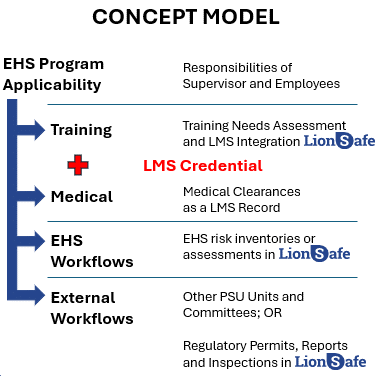
The model outlines five key areas if the Environmental Health and Safety program is applicable.
- EHS Program Applicability: If applicable, program-specific responsibilities for Supervisor and Employees are provided.
- Training: If appliable, program-specific training requirements are outlined with associated training needs assessment and proposed integration between the learning management system (LMS) and LionSafe.
- Medical: If applicable, program-specific medical clearance requirements with Penn State Occupational Medicine are outlined. A red plus sign next to "Training" and “Medical” points to proposed future state "LMS Credential."
- EHS Workflows: If applicable, program-specific EHS workflows including risk inventories or assessments in LionSafe are outlined.
- External Workflows: If applicable, other program-specific requirements are described in coordination with Other PSU Units and Committees and Regulatory Permits, Reports and Inspections in LionSafe.
A vertical blue arrow on the left indicates the flow to each of the five categories from "EHS Program Applicability" down through "External Workflows."